

Wage Growth Slows to 3.1% as Benefit Costs Climb, Employment Cost Index Shows
Pay raises for American workers are getting smaller, while the cost of providing benefits keeps rising faster. The U.S. Bureau of Labor Statistics (BLS) reported on Friday, October 30, that wages and salaries for civilian workers rose 3.1% in the 12 months ending in September 2026, while benefit costs rose 3.9%. Total employer compensation costs were up 3.4% over the year.
The figures come from the quarterly Employment Cost Index (ECI), a measure that economists and Federal Reserve officials watch closely because it tracks the cost of labor for a fixed mix of jobs, rather than being swayed by shifts in who is hired or laid off.
What happened
According to the BLS release, compensation costs for civilian workers rose 0.8% in the three months ending in September, on a seasonally adjusted basis. Within that, wages and salaries rose 0.7% and benefits rose 0.9% for the quarter.
Key 12-month figures from the release:
- Private industry wages and salaries: up 3.1%.
- Private industry benefit costs: up 3.9%, with employer costs for health benefits up 6.4%.
- State and local government compensation: up 3.5%, with wages up 3.2%.
- Union vs. nonunion workers (private industry): compensation rose 4.3% for union workers and 3.3% for nonunion workers.
After adjusting for inflation, BLS said private industry wages and salaries fell 0.6% over the year, meaning paychecks bought less in September than they did a year earlier.
Economic research firm Haver Analytics noted that the 3.1% pace of private-sector wage growth is the slowest since the first quarter of 2021, while the gap between rising prices and pay left inflation-adjusted wages at their weakest reading since 2012.
Why it matters for small businesses
The report sends mixed signals for owners who employ staff, hire contractors or sell to consumers.
- Hiring costs: Slower wage growth suggests less pressure to offer large raises to keep or attract workers. That can ease payroll planning for 2027.
- Benefit costs: Health coverage is the expense moving fastest. A 6.4% rise in employer health costs can outpace revenue growth for a small team, especially at renewal time.
- Customer demand: When inflation runs ahead of pay, households have less room for discretionary spending. Sellers of gifts, crafts and non-essential products may see shoppers compare prices more carefully this holiday season.
- Interest rates: The Fed watches labor costs for signs of inflation pressure. Cooler wage growth gives policymakers one less reason to raise rates, though inflation itself remains elevated.
What you can do now
- Budget raises realistically. If you plan pay increases for 2027, compare them with the 3.1% private-sector benchmark and with your own margins. Our guide to creating a monthly small business budget can help you model the cost.
- Check your benefit renewal early. Ask your broker or provider for 2027 rates now, so a health cost increase does not surprise your cash flow in January.
- Watch price sensitivity. With real wages down, test bundles or value tiers rather than across-the-board price increases. See how to price handmade products for profit.
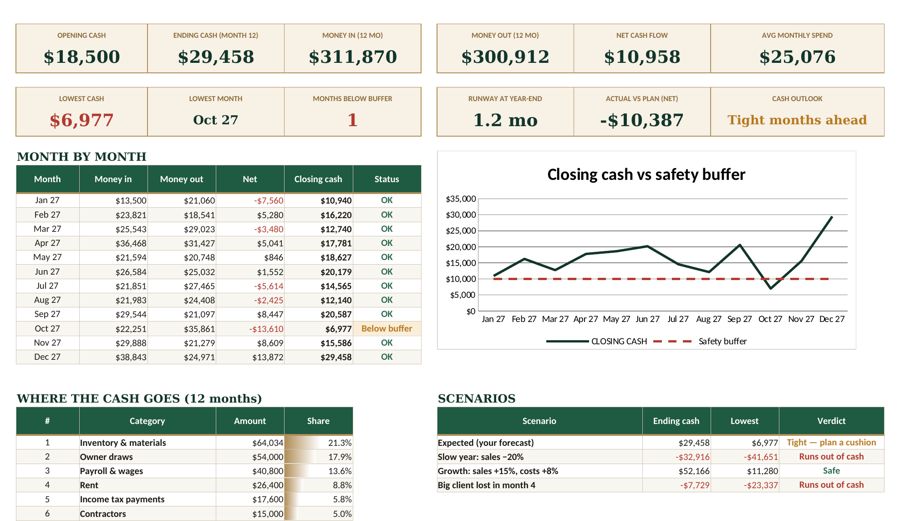
- Update your cash forecast. Add expected payroll and benefit changes to a 13-week cash flow forecast so you can see the impact before it hits.
BLS will publish the next Employment Cost Index, covering the fourth quarter of 2026, on January 29, 2027.
This brief is for general information only and is not financial, tax or legal advice.
Sources
Tools mentioned in this article
More news

Fyscale news briefs summarize public information from the sources listed above; read our editorial policy. This article is general information for US small businesses, not tax, legal or accounting advice. Check current IRS guidance or ask a qualified professional about your situation.