

October Jobs Report, ISM and JOLTS Data Headline Election Week for Small Businesses
The government’s October employment report is due Friday, Nov. 6, at 8:30 a.m. Eastern, capping a week that also brings factory survey data, a fresh read on job openings and the Nov. 3 midterm elections. After September payrolls rose by only 29,000, according to the Bureau of Labor Statistics, the week’s numbers will show whether hiring is stalling just as the holiday selling season begins.
What happened
The data calendar for Nov. 2–6 is packed:
- Monday, Nov. 2: The Institute for Supply Management (ISM) releases its October manufacturing survey. In September the index slipped to 54.5 from 54.6, but the prices-paid component jumped to 77.9 from 71.1, according to a First Trust summary of the report. Readings above 50 signal expansion.
- Tuesday, Nov. 3: BLS publishes the Job Openings and Labor Turnover Survey (JOLTS) for September at 10 a.m. Eastern. August openings were 7.1 million, according to Yardeni Research. It is also Election Day for the midterms.
- Wednesday, Nov. 4: ADP’s private payroll estimate and the ISM services survey are scheduled.
- Thursday, Nov. 5: BLS releases preliminary third-quarter productivity and labor costs at 8:30 a.m., alongside weekly jobless claims.
- Friday, Nov. 6: The October Employment Situation report.
The September jobs report set a soft baseline. BLS said payrolls rose 29,000, the unemployment rate held at 4.2%, and average hourly earnings for private workers rose 0.1% for the month and 3.0% over the year to $37.81. Revisions also lowered July and August by a combined 60,000 jobs, with July now showing a loss of 10,000.
Why it matters for small businesses
Hiring and wages. A labor market where few people are laid off but few are hired makes it easier to find applicants, yet wage pressure has not disappeared. Friday’s earnings figures help you judge whether your pay rates are keeping pace.
Input costs. The ISM prices index is one of the earliest signals of what suppliers will charge. September’s 77.9 reading suggested factories were facing sharply higher costs, which can reach small sellers through materials, packaging and shipping.
Borrowing costs. The Federal Reserve held its benchmark rate at 3.75%–4% last week. Strong jobs or price data could keep pressure on rates for business lines of credit and credit cards; weak data could ease it. Neither outcome is certain, and markets can swing on a single report.
Consumer demand. Payroll growth and wages feed directly into holiday spending power, which matters most for product sellers heading into Black Friday.
What you can do now
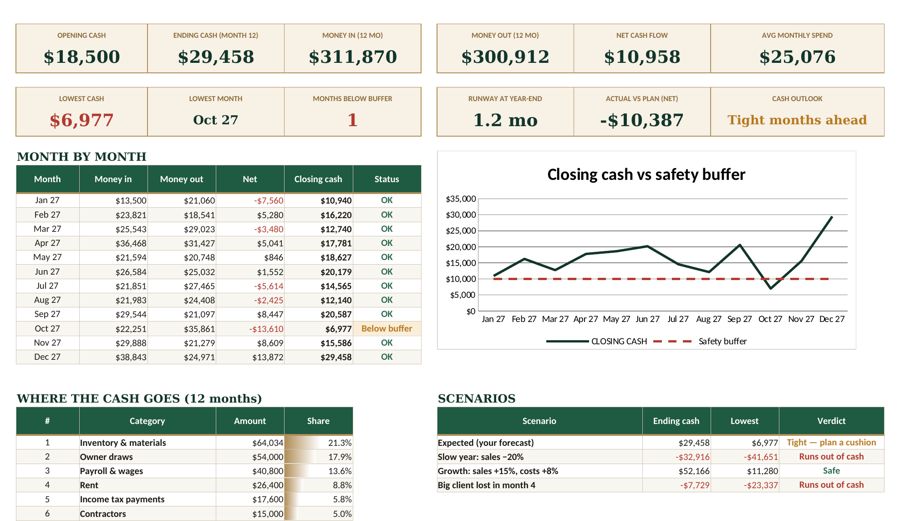
- Update your cash flow forecast with conservative holiday sales and a cushion for rising costs. Our guide to a 13-week cash flow forecast walks through it.
- Lock in supplier prices for December materials and packaging where you can, before any new increases.
- Review variable-rate debt. Note your current rate on lines of credit and cards and plan to pay down the most expensive balances first.
- Check your own pay rates. Compare what you pay helpers, or charge clients, with the 3.0% annual wage growth BLS reported. Freelancers can use our real hourly rate guide.
- Plan for some noise. Election week can move markets. Base decisions on your own sales and cost data rather than one day’s headlines.
Sources
Tools mentioned in this article
More news

Fyscale news briefs summarize public information from the sources listed above; read our editorial policy. This article is general information for US small businesses, not tax, legal or accounting advice. Check current IRS guidance or ask a qualified professional about your situation.