

Housing Starts Fall 5.2% in September as Builder Confidence Hits 14-Year Low

Home construction slowed in September as higher mortgage rates kept buyers away. The Census Bureau reported on October 20 that privately owned housing starts fell 5.2% to a seasonally adjusted annual rate of 1,221,000, down from a revised 1,288,000 in August. A day earlier, the National Association of Home Builders said builder confidence had dropped to its lowest reading since June 2012.
What happened
Starts and permits. Total starts came in well below the 1.305 million economists polled by Reuters had expected. Single-family starts fell 4.6% to an 859,000 annual rate, while starts of buildings with five or more units fell 7.2% to 349,000, according to Reuters’ report on the Census data. The Census Bureau notes that monthly changes in starts carry a wide margin of error, so a single month should be read with caution.
Building permits, a signal of future construction, were little changed overall at a 1.400 million rate. Single-family permits, however, fell 4.0% to 845,000, their lowest level since March 2023, Reuters reported.
Builder sentiment. The NAHB/Wells Fargo Housing Market Index fell 3 points to 29 in October. All three parts of the index declined: current sales conditions dropped to 33, expected sales over the next six months fell to 32, and the gauge of prospective buyer traffic slid 5 points to 18.
The survey also showed how builders are responding. NAHB said 43% of builders cut prices in October, the highest share since at least 2020, with an average cut of 6%. Sixty-five percent offered sales incentives such as mortgage rate buydowns.
Mortgage rates. The average 30-year fixed mortgage rate reached 7.40% in the week before the report, its highest level in nearly three years, according to Freddie Mac data cited by Reuters. NAHB Chairman Bill Owens said rates have “climbed well above 7% in recent weeks.”
Why it matters for small businesses
- Contractors and trades. Fewer new homes means less work for builders, electricians, plumbers, landscapers and other trades that depend on new construction, especially in the single-family segment.
- Home-related sellers. New homeowners buy furniture, décor, wall art and organization products. A slower housing market can soften demand for these categories, including on Etsy and other marketplaces.
- Credit is getting pricier. Mortgage rates move with longer-term borrowing costs. When they rise, business loans, equipment financing and lines of credit tend to cost more as well.
- Builders are discounting. With 43% of builders cutting prices, suppliers to the industry may face pressure on their own pricing and payment terms.
What you can do now
- Review your customer mix. If a large share of your revenue depends on new construction or home moves, look for repeat buyers, remodeling work or other segments to balance it.
- Tighten payment terms. When customers are under pressure, invoices can slip. Ask for deposits on larger jobs and follow up on overdue balances promptly.
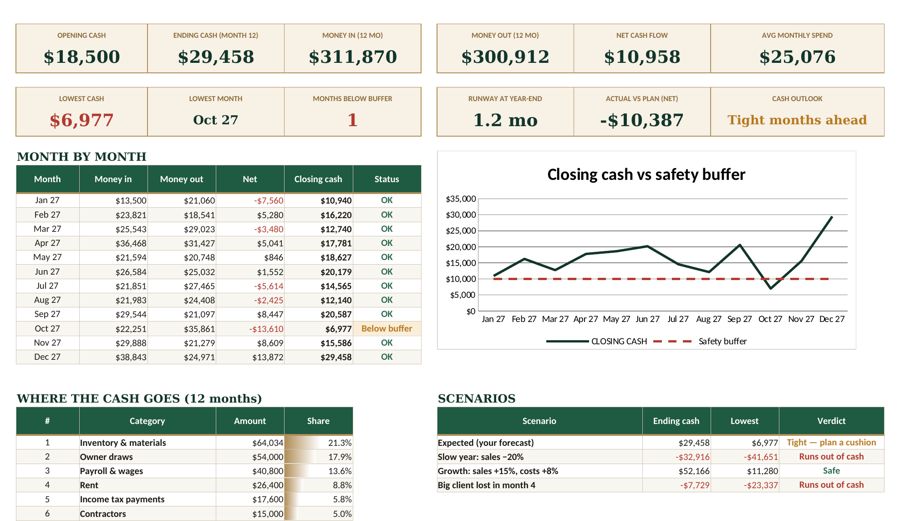
- Plan for slower months. Build a simple 90-day cash forecast so a soft season does not catch you short. Our guide to small business bookkeeping covers the basics.
- Price financing into big purchases. If you plan to buy equipment or stock up on inventory with credit, compare rates now and include interest in your cost math.
- Adjust inventory for home-goods demand. Sellers of décor and home products can watch sales trends closely and avoid overstocking ahead of the holidays. See how to track inventory in a spreadsheet.
This brief is general information, not financial advice.
Sources
Tools mentioned in this article
More news



Fyscale news briefs summarize public information from the sources listed above; read our editorial policy. This article is general information for US small businesses, not tax, legal or accounting advice. Check current IRS guidance or ask a qualified professional about your situation.