

Consumer Sentiment Holds Near Lows at 48.0 in October as Price Worries Grow
The University of Michigan’s index of consumer sentiment finished October at 48.0, essentially unchanged from 48.1 in September and about 10% below the 53.6 reading a year earlier, according to final survey results released Friday, Oct. 23, 2026. Under the surface, Americans rated their current situation noticeably worse and said high prices are taking a bigger bite out of their budgets.
What happened
- Headline index: 48.0 in October versus 48.1 in September. The university said the one-tenth-point move is not statistically significant. Bloomberg described the reading as a five-month low.
- Current conditions fell: The Current Economic Conditions index dropped to 46.7 from 50.9 in September and 58.6 a year ago.
- Expectations improved: The Index of Consumer Expectations rose to 48.8 from 46.3, though it remains below last October’s 50.3.
- Inflation expectations edged up: Consumers expect prices to rise 4.7% over the next year, up from 4.6%, and 3.5% per year over the long run, up from 3.4%.
- Prices are the main complaint: 56% of respondents said high prices are hurting their personal finances, the fourth straight monthly increase. More than 40% brought up gasoline prices without being asked. Survey director Joanne Hsu said “purchasing power continues to dominate” how consumers see the economy.
- Context: ABC News reported a national average gas price of $4.29 per gallon from AAA. September consumer prices were up 3.7% from a year earlier, as we covered in our September inflation brief.
Why it matters for small businesses
Sentiment is not the same as spending. Retail sales rose 0.8% in September, according to the Census Bureau, even as moods stayed gloomy. But a weaker read on current conditions, combined with rising inflation expectations, suggests shoppers may become more selective heading into the holiday season.
For small sellers, that usually shows up as more comparison shopping, more interest in discounts and bundles, and slower decisions on bigger-ticket items. Rising inflation expectations also matter for costs: when consumers and businesses expect higher prices, suppliers tend to raise quotes, and the Federal Reserve is more likely to keep borrowing costs elevated.
What you can do now
- Lead with value. Make it easy to see what buyers get for the price: bundles, clear sizing or usage details, and gift-ready options tend to help when shoppers are price-sensitive.
- Protect your margin before discounting. Know your true cost per order, including platform fees, before running a sale. Our breakdown of Etsy fees can help sellers on that platform.
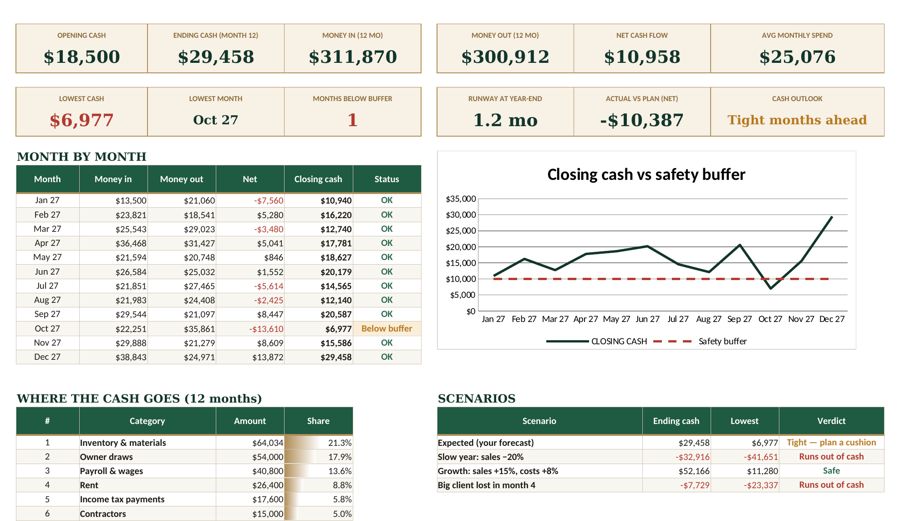
- Stress-test your cash flow. Run a cautious holiday scenario with lower order volume and higher input costs. A 13-week cash flow forecast shows where gaps could appear.
- Lock in key costs where you can. If a supplier offers fixed pricing on packaging or materials through the holidays, compare it against the risk of further increases.
- Watch the next data. The preliminary November sentiment reading is scheduled for Friday, Nov. 6, 2026.
This brief is for general information only and is not financial or investment advice.
Sources
- University of Michigan Surveys of Consumers — Survey results (October 2026 final)
- University of Michigan News — As concerns over purchasing power dominate, consumer sentiment moves sideways
- ABC News — Consumer sentiment nears all-time low ahead of midterms
- Bloomberg — US Consumer Sentiment Drops to Five-Month Low as Inflation Pressures Mount
Tools mentioned in this article
More news
Fyscale news briefs summarize public information from the sources listed above; read our editorial policy. This article is general information for US small businesses, not tax, legal or accounting advice. Check current IRS guidance or ask a qualified professional about your situation.