

Which Business Records to Keep, and for How Long

Shoeboxes of receipts, years of bank statements, a laptop folder called “taxes old”: most small business owners either keep everything forever or throw things out and hope. Neither is ideal. Knowing how long to keep business records lets you clear clutter with confidence and still have what you need if the IRS, a lender or a buyer ever asks. This guide covers the general IRS timelines, the records that need special handling, and a simple system to keep it all organized. It is general information; your state, lender or industry may require longer retention.
Why records matter in the first place
Your records are the evidence behind every number on your tax return. They show where income came from and prove that expenses were real business expenses. The IRS expects you to keep records that support your income, deductions and credits; its recordkeeping page explains what counts.
Good records also make day-to-day bookkeeping easier. If you already reconcile your bank accounts each month, you are most of the way there.
How long to keep business records: the general IRS rules
How long you keep a record depends on the “period of limitations,” the window during which you can amend a return or the IRS can assess more tax. The IRS summarizes these on its page How long should I keep records?
| Situation | Keep records for |
|---|---|
| Most tax records supporting a return | 3 years from filing (or the due date, if later) |
| You claim a loss from worthless securities or a bad debt deduction | 7 years |
| You fail to report income that is more than 25% of the gross income shown on the return | 6 years |
| Employment tax records (if you have employees) | At least 4 years after the tax is due or paid, whichever is later |
| You do not file a return | Indefinitely |
| You file a fraudulent return | Indefinitely |
| You file a claim for credit or refund after filing | The later of 3 years from filing or 2 years from paying the tax |
For most sole proprietors who file on time and report all their income, three years is the core rule. Many owners round that up to seven years for simplicity, which covers every common case above.
Worked example: when can you shred?
Sam is a freelance photographer. She files her 2026 tax return on February 20, 2027, ahead of the April 15, 2027 deadline.
A return filed early is treated as filed on the due date. So her three-year window runs from April 15, 2027 to April 15, 2030. Under the general rule, she can discard routine 2026 receipts after that date, unless one of the longer periods applies.
If Sam prefers the seven-year habit, she would keep her 2026 file until April 2034.
Records that follow different rules
Business assets
Keep records for equipment, vehicles and other property until the period of limitations expires for the year you sell or dispose of the asset. You need them to calculate depreciation and your gain or loss.
Example: Sam buys a camera body for $1,800 in 2026 and sells it in 2029. She needs the purchase records until the limitations period for her 2029 return ends, around April 2033 under the three-year rule, not 2030.
Records to keep permanently
- Copies of filed tax returns (useful for loans, amended returns and future planning)
- Business formation documents, EIN letter and licenses
- Contracts, leases and agreements still in effect (plus a reasonable period after they end)
- Ownership records for property and major assets you still hold
Records lenders and others may want
Banks, landlords and business buyers often ask for two to three years of tax returns and financial statements. Insurance companies may want records related to claims. These requirements can be longer than the IRS minimum.
What to keep for each tax year
| Record type | Examples |
|---|---|
| Income | Invoices, sales reports, marketplace and processor statements, 1099s received |
| Expenses | Receipts, bills, canceled checks, card statements |
| Bank records | Monthly statements for every business account |
| Mileage | Your mileage log with dates, purpose and miles |
| Payroll and contractors | W-9s, 1099s issued, payroll reports |
| Inventory | Year-end counts, purchase records |
| Home office | Measurements, related utility and rent bills |
| Tax filings | The return, estimated payment confirmations, notices received |
A receipt alone does not always explain the business purpose. Add a short note (“client lunch, project kickoff with Acme”) or record the purpose in your expense log. Using consistent expense categories makes this much faster.
Paper vs digital records
The IRS generally accepts electronic records, including scans and photos, as long as they are complete, legible and can be produced when needed. A practical setup:
- One folder per tax year, with subfolders for income, expenses, bank, mileage, assets and tax filings.
- Scan or photograph paper receipts the week you get them; faded thermal paper becomes unreadable.
- Name files consistently, for example
2026-11-04_office-supplies_42.18.pdf. - Back up in two places, such as cloud storage plus an external drive.
- Keep a separate “permanent” folder for formation documents, returns and asset records.
A once-a-year cleanup routine
Right after you file each spring, as part of your year-end tax checklist follow-up:
- [ ] Save a copy of the filed return in the permanent folder.
- [ ] Move the completed tax year’s folder to archive storage.
- [ ] Check which years have passed their retention window.
- [ ] Before shredding, confirm no asset, loss or open issue is tied to that year.
- [ ] Shred paper securely and delete digital files deliberately, not by accident.
Bottom line
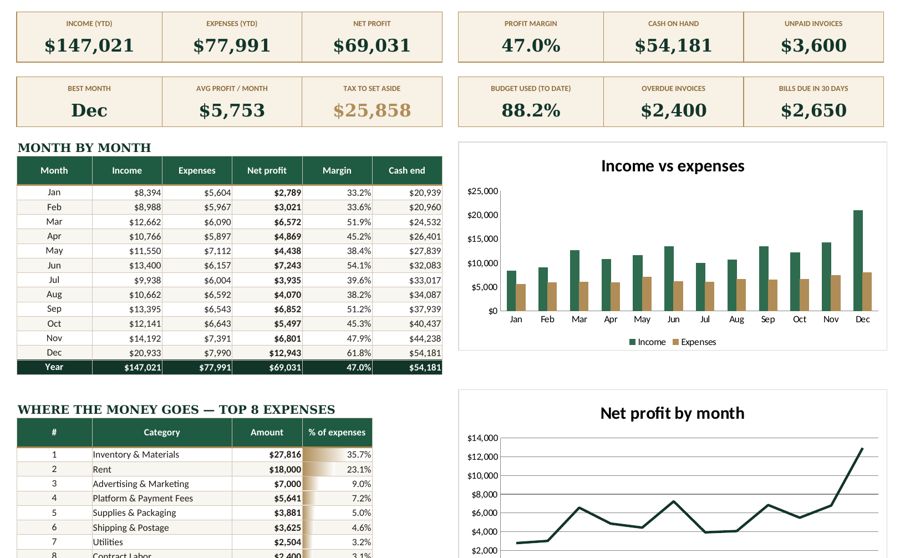
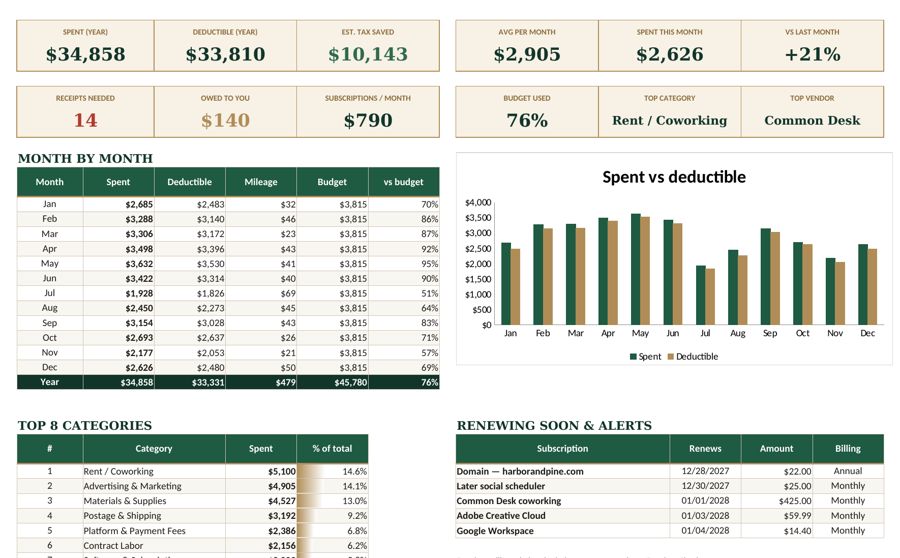
Keep most supporting records for at least three years after filing, keep asset records until three years after you dispose of the asset, keep tax returns and formation documents permanently, and consider a seven-year habit if you want a simple rule. If you track expenses in a spreadsheet, the Fyscale bookkeeping and expense templates give each transaction a category, a note field and a receipt link, so your records are organized before tax time arrives.
Tools mentioned in this article
Keep reading



This article is general information for US small businesses, not tax, legal or accounting advice. Check current IRS guidance or ask a qualified professional about your situation.