

Schedule C Expense Categories, Explained in Plain English

If you are self-employed in the US, you report business income and expenses on Schedule C (Form 1040). The form groups expenses into numbered lines. Sorting each expense into the right line as you go makes tax time much calmer — and makes it easier to spot deductions you might miss.
Below is a plain-English tour of the lines most small businesses use. It is a general overview, not tax advice; check the current IRS instructions for Schedule C or ask a tax professional about your situation.
The lines most small businesses use
| Line | Category | Typical examples |
|---|---|---|
| 8 | Advertising | Etsy Ads, Facebook ads, business cards, sponsored posts |
| 9 | Car and truck expenses | Business miles (standard mileage rate) or actual vehicle costs |
| 10 | Commissions and fees | Marketplace and payment processing fees |
| 11 | Contract labor | Freelancers you pay to help your business |
| 15 | Insurance (other than health) | Business liability insurance |
| 17 | Legal and professional services | Accountant, bookkeeper, lawyer |
| 18 | Office expense | Printer ink, postage, small office supplies |
| 20b | Rent or lease – other business property | Studio or booth rent |
| 22 | Supplies | Materials and supplies used in your business |
| 24a | Travel | Business trips (transportation, lodging) |
| 24b | Deductible meals | Business meals, generally 50% deductible |
| 25 | Utilities | Business phone and internet (business-use portion) |
| 27b | Other expenses | Software subscriptions, education, bank fees — list them on Part V |
Three habits that make it easy
- Log expenses weekly. A five-minute weekly habit beats a weekend of digging through receipts in April.
- Pick the category when you log. Deciding the Schedule C line at the moment you record the expense is faster and more accurate than sorting a year of data later.
- Keep the receipt with the record. Note where each receipt lives (email, photo, folder) so you can find it if you ever need it.
Mileage: the deduction people forget
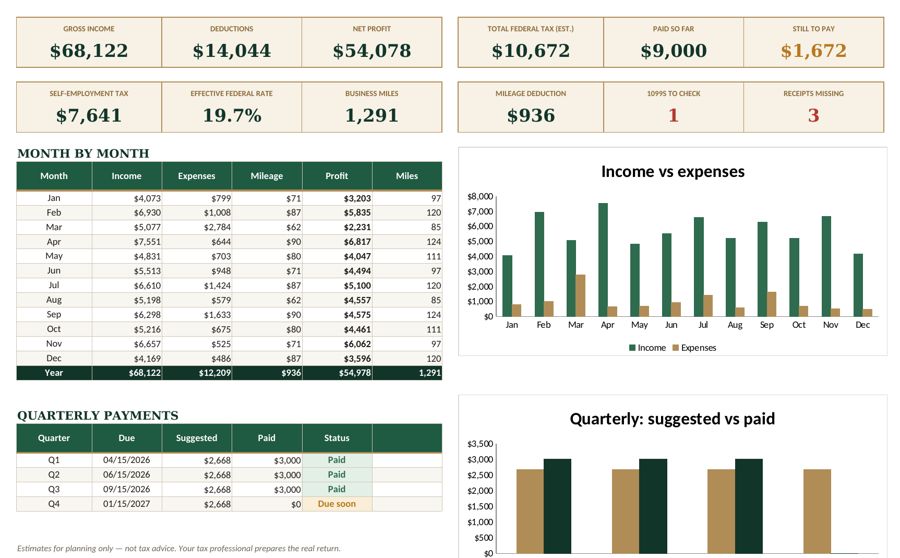
If you drive for business — to the post office, a craft fair or a client — track the date, purpose and miles of each trip. You can generally deduct either the IRS standard mileage rate (72.5 cents per mile for 2026) or your actual vehicle costs, not both, so a simple mileage log is worth keeping from January 1.
Let a spreadsheet do the sorting
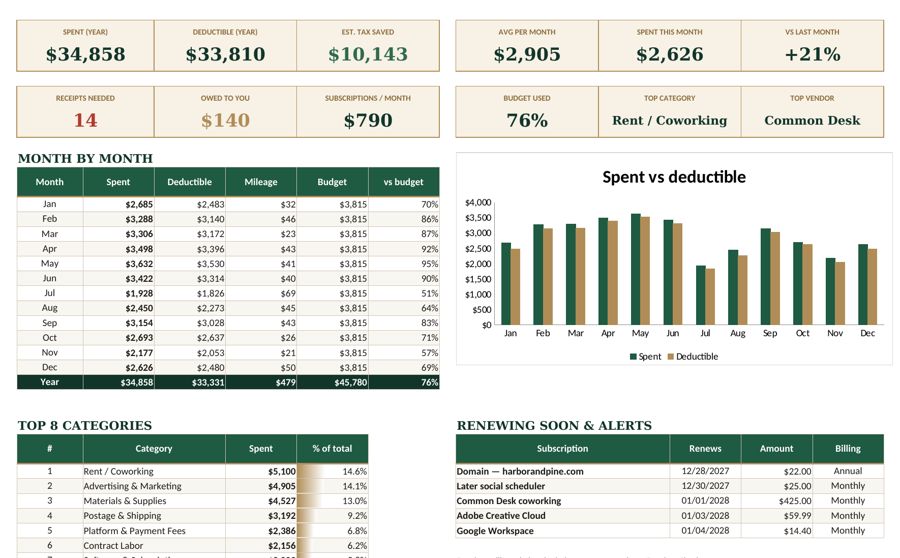
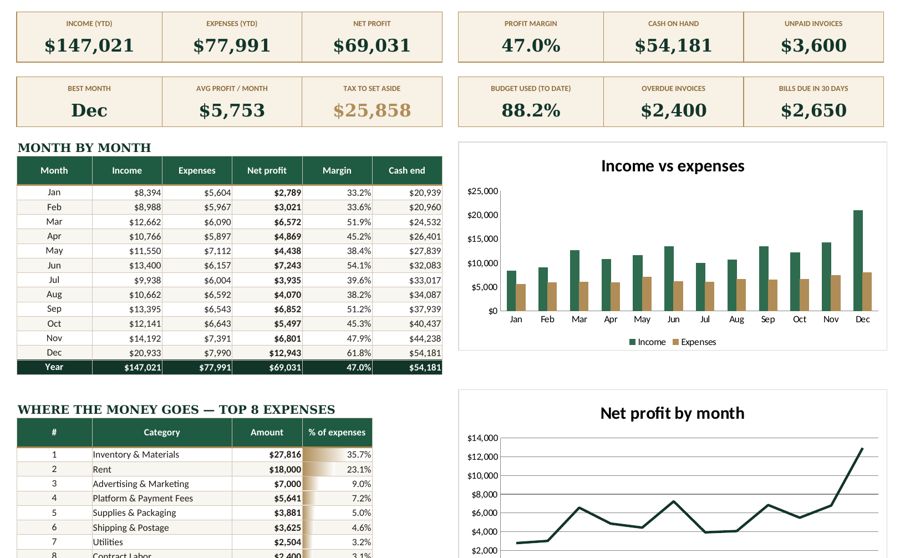
A good expense tracker lets you choose a Schedule C line from a drop-down and totals every line for you, along with mileage and subscriptions. That way your year-end numbers are ready the moment you need them.
Tools mentioned in this article
Keep reading


This article is general information for US small businesses, not tax, legal or accounting advice. Check current IRS guidance or ask a qualified professional about your situation.